Making your private health insurance journey simple
We work closely with most major private insurance companies to make your treatment as straightforward as possible. So, if you’ve got private healthcare insurance with any of the following insurance providers, our team of healthcare experts are ready to get you back to your best: Allianz, Aviva, AXA, Bupa, Healix, Vitality, and WPA.
“Everything was smooth, well-organised, and stress-free. Practice Plus Group made the process effortless – from using my private insurance to the care I received throughout.” Chris Newberry, hip patient.
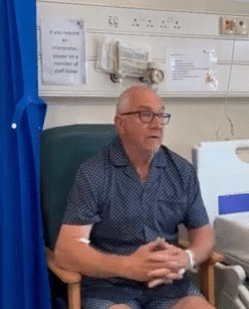

Sue Bateman talks about accessing hip surgery with her private medical insurance
11
A step-by-step guide to your private health insurance journey
Cover varies depending on your policy and private medical insurance provider, but most require a GP referral and authorisation from your insurance company before treatment can begin.
Step 1
Get referred – Ask your GP or specialist to refer you to your nearest Practice Plus Group hospital.
Step 2
Confirm your cover – Contact your insurance provider to check your policy covers the treatment you need. Let them know your preferred location and/or consultant. Ask for your authorisation code.
Step 3
Book your consultation – Our friendly advisers can book your appointment for you, just have your authorisation code to hand when you call – 0330 818 8945 or send us a message via our quick form here and they’ll handle the rest.
Step 4
Treatment and aftercare – Following your consultation, if medical treatment or surgery is recommended, we’ll invoice your insurer directly* (you may need to pay any excess depending on your policy).
From joint replacement to eye surgery, our first-class consultants provide healthcare for a range of specialities. All of our consultants are registered, approved, and experienced. You can search by language, treatment, and location on our website to find a selection of specialists near you.
With the right consultant by your side, you can focus on recovery and getting back to the things you love.
Hear from our patients using private medical insurance
The following patient stories detail how some of our past patients accessed private medical treatment with us through their healthcare insurance
Hear from our consultants talking about healthcare with private medical insurance
Orthopaedic Consultant Gyorgy Lovasz talks Private Medical Insurance | Practice Plus Group
Consultant Orthopaedic Surgeon, Waqar Jan, talks Private Medical Insurance | Practice Plus Group
Orthopaedic Consultant Nawar Abdulsattar talks Private Medical Insurance | Practice Plus Group
Orthopaedic Consultant Kenan Dehne talks Private Medical Insurance | Practice Plus Group
Consultant General Surgeon Erika Birgiolaite talks Private Medical Insurance | Practice Plus Group
Consultant ENT Surgeon Szabolcs Szigethy talks Private Medical Insurance | Practice Plus Group
16
Our locations
Understanding private medical insurance and what it covers
We work closely with most major private insurance companies to make your treatment as straightforward as possible. So, if you’ve got private healthcare insurance with any of the following insurance providers, our team of healthcare experts are ready to get you back to your best: Allianz, Aviva, AXA, Bupa, Healix, Vitality, and WPA.
What is private medical insurance and how it works in the UK
Sometimes called PMI, private medical insurance pays for the costs of private healthcare. You pay a monthly or annual fee (called a premium) to an insurance company. If you then need treatment for a condition covered by your policy, your insurance provider will pay all or part of the cost. Private healthcare policies in the UK typically cover curable illness or injuries that occur after your insurance policy starts.
Common terms you should know
Level of cover – this defines the amount of protection provided by your insurance policy. For private medical insurance, it determines how much of your healthcare will be covered financially.
Excess – this refers to the amount you have to pay towards the cost of your private healthcare. It’s usually an amount that’s pre-agreed with your insurance provider before your cover starts.
Preauthorisation – this is the process in which insurance providers confirm that medical treatment is necessary before it begins.
What private medical insurance is designed to cover in the UK
Private medical insurance in the UK is typically designed to offer financial protection for short-term, acute health conditions. Diagnostic tests, consultations, and physio during recovery are usually covered too.
What is not usually covered by private medical insurance
PMI typically does not cover health issues that predate the policy starting and long-term illnesses. In most cases, they also don’t cover emergency care and cosmetic surgery.
How insurance companies assess treatment and eligibility
From analysing lifestyle habits to data about demographics, private health insurance companies consider a range of different factors when assessing eligibility. We explore what these are in the sections below.
How insurers review medical history and referrals
One of the first things private health insurance companies assess are lifestyle habits. Smoking, alcohol consumption, and even driving habits are taken into account when it comes to eligibility. Your medical history will also be analysed to see whether you have previously suffered from illness and long-term conditions.
Data from where you live may also be researched as it provides the opportunity to gauge certain risk levels.
Accessing private medical treatment through your insurance
If you need to access medical treatment and have private medical cover, you should be able to use your policy to cover some or all the cost of your treatment.
First, you’ll need to get in touch with your insurance provider to ask whether the specific treatment you need is covered in your policy. If it is listed, you’ll be given an authorisation code that you’ll need to quote to our friendly advisors when you book yourself in for a consultation. Simply give us a call on 0330 162 9379 and we’ll handle the rest.
How private medical insurance improves access to treatment
Patients seeking healthcare at Practice Plus Group via a private medical insurance policy enjoy the same benefits as other private patients. These include flexibility around when and where treatment takes place. We have a number of private hospitals to choose from, all providing high-quality healthcare.
Another benefit is fast access to this treatment. With Practice Plus Group, you’ll have your treatment just 4-6 weeks after your initial consultation, regardless of hospital location or the type of treatment you need.
Pre-existing, chronic, and short-term medical conditions
As we’ve previously seen, PMI is geared towards providing financial protection for short-term, curable medical conditions. But what does this specifically include? While coverage varies depending on insurance provider and level of cover, the information below sheds light on the details of what you might expect to be included in a private health insurance policy.
The following are examples of health conditions that could be covered by private health insurance:
Operations such as hip, knee, or hernia surgery
Diagnostic testing such as MRI scans, X-rays, ultrasounds, and CT scans
Consultations with a healthcare specialist designed to diagnose an issue and devise a treatment plan
Physiotherapy providing treatment for musculoskeletal issues
Private GP appointments.
How pre-existing conditions are defined by insurers
While official definitions vary between insurance providers, a pre-existing health condition is generally defined as follows:
“Any illness, injury, or symptom – diagnosed or undiagnosed – that existed before the start of a policy.”
This can include conditions such as diabetes or long-term health issues that require medication to regulate.
Costs, excesses, and what your insurance may pay for
From physiotherapy to post-treatment medication, private medical insurance often covers (or partially covers) a range of different aspects involved in the patient experience.
What costs are usually covered by private health insurance?
While it depends on the level of cover you have and which insurer is providing your insurance, generally, the following costs involved in a private healthcare journey are included:
Initial consultation
Diagnostic tests (if needed)
Treatment
Hospital stay (if needed)
Post-treatment physiotherapy.
Situations where additional charges may apply
The following may incur additional charges:
Pre-existing conditions
Chronic conditions
Dental treatment
Routine check-ups or screening
External appliance or prosthesis (this is policy dependent)
Prescriptions
You should check with your insurer for a full breakdown of when to expect additional charges.
The role of consultants in insured patient care
First, it’s important to note the difference between healthcare consultants and insurance consultants. While insurance consultants manage and navigate policies, the role of healthcare consultants covers the following:
Quality of healthcare, diagnosis and subsequent treatment plan (if needed)
Approval from specific insurers; at Practice Plus Group, our consultants are recognised by the following providers – Allianz, Aviva, AXA, Bupa, Healix, Vitality, and WPA.
How consultants work with insurance providers
To be eligible to treat insured patients, consultants first need to apply for clinical recognition with private medical insurance providers. This is to ensure they meet the specific standards set by different providers.
If you’re unsure about whether a specific consultant is covered by your insurance provider, you’ll need to get in touch with them to clarify.
Patient experiences with private medical insurance
The following video and written testimonials are from real patients who have accessed private treatment with Practice Plus Group via their health insurance policies. In their testimonials, they talk about how easy the process was, the speed with which they had their treatment, and the peace of mind their experiences have given them.
Sue Bateman talks accessing hip surgery through private medical insurance
11
Common reasons patients choose private medical insurance
Some of the most common reasons patients choose to access healthcare via private medical insurance include:
Fast access to healthcare
Flexibility around treatment time and location
Treatment cost partially or completely covered
Consistency of healthcare from consultation to treatment.
What insured patients value most about private care
According to one of our past patients, one of the most valued aspects of insured private care is the peace of mind it provides. Below is a quote from Nathalie, an ultrasound patient at Practice Plus Group Diagnostics, Buckinghamshire who talks about the reassurances she got from her private health insurance.
“I would certainly recommend anyone currently experiencing a long wait for an NHS scan to claim on their health cover or pay for a private diagnostics appointment with Practice Plus Group for a speedier ultrasound and added peace of mind.”
Not yet found the information you’re looking for? Our dedicated health insurance FAQs can help.
What is private medical insurance?
Also called PMI, private medical insurance is a policy or plan that helps to cover the financial side of medical treatment. The insurance is designed to cover people in the event they develop or contract a range of different diseases and conditions. One of the main benefits of this specialist insurance is the peace of mind it provides.
Can I get health insurance before surgery?
Yes. However, your insurance won’t cover pre-existing conditions i.e. conditions that developed before taking out the policy. Health insurance for elderly parents is also available but please be aware it’s likely the older the patient, the higher the premiums will be.
Does my health insurance cover surgery costs?
Yes, however, if you were sensing a ‘but’, you’d be correct. Policies will differ provider-to-provider with regards to level of cover. You should check your policy to see if surgery costs are covered.
Which insurance brokers do you work with?
At Practice Plus Group, we work with the following insurance providers:
– Allianz – Aviva – AXA Health – Healix Health Services – Vitality – WPA – Bupa – National Police Healthcare Scheme
What is the average cost of surgery with insurance?
This depends on the type of surgery you need. For example, cataract surgery costs £2,099 per eye for a standard monofocal lens, whereas knee revision surgery costs £22,249
How do I make a claim?
First, you’ll likely need a GP referral to access healthcare with Practice Plus Group. You’ll need to ensure the referral contains the treatment you need and the hospital of your choice.
Once you have this, you’ll need to call your insurance provider. Make sure you have your insurance number and the GP’s referral details to-hand. Your insurance provider will confirm whether your treatment is covered by your policy or not. If it is, you’ll be able to proceed with an initial consultation.
How does the payment process work?
A price is agreed by the approved insurer before the patient’s initial consultation. This is based on the GP referral and a price agreed with Practice Plus Group.
What do I need to do before surgery?
If you’re accessing healthcare via private medical insurance, the main thing you’re likely to need is a GP referral. This will include the type of treatment you need along with the hospital where you wish to have it.
Other pre-surgery considerations include getting yourself physically and mentally prepared, making travel arrangements, and giving up health-damaging habits such as smoking or drinking alcohol to excess.
How much excess will I pay?
This depends on your health insurance policy provider and the level of cover you have. Check with your insurance provider for more details about your specific policy.
Does insurance cover cataract surgery?
Yes, insurance for cataract surgery is available. If you have an active health insurance policy, you’ll need to check whether cataract surgery is a condition that’s covered.
Does health insurance cover knee surgery?
Yes, insurance that covers knee surgery is available. If you have an active health insurance policy, you’ll need to check whether treatment for knee procedures are covered.
Do insurers cover private medical treatment in full?
This depends on the level of cover you have and your insurance provider. You’ll need to check with them to find out more.
Can I use private medical insurance for surgery?
This depends on the type of surgery you need. Knee and hip surgery typically are covered by most health insurance policies but you’ll need to confirm with your provider before you can proceed with a booking.
What happens if my insurer declines cover?
There are various reasons a claim may be declined. Your insurer will be able to explain the limitations of your policy and the specific reason for the rejection.
Can private insurance be used for emergency care?
No, private health insurance cannot be used for emergency treatment as this is considered as primary care.
**National Joint Registry data, hip and knee surgeries at all Practice Plus Group Hospitals across England in 2024.
Private consultations
1. What’s included:
A private consultation with a specialist consultant.
X-rays if deemed necessary by the consultant.
Any required blood tests, or swabs, as determined necessary by the consultant.
2. What’s not included:
Additional imaging such as MRI or CT scans.
Further diagnostic tests beyond standard blood tests and X-rays.
Any follow-up appointments or treatments beyond the initial consultation.
3. Eligibility:
Available to self-paying patients only.
Subject to consultant availability.
4. Booking and payment:
Payment must be made at the time of booking.
Cancellations or rescheduling require at least 7 days notice.
5. General conditions:
The consultant will determine the necessity of X-rays and blood tests during the appointment.
If further tests or treatment are required, these will be discussed, and additional costs will apply.
This offer is non-transferable and cannot be combined with other promotions.
Operations within 4-6 weeks: treatment may be longer for patients who are not considered fit for surgery on initial consultation and diagnosis.
Consultations within 1-2 weeks: consultant availability at any given site may vary, and it may take up to 2 weeks for a consultation appointment. If you wish to see a specific consultant, wait times may exceed 1-2 weeks depending on their availability.
Pricing: Our costs are uniform nationally, however customers may be required to pay for scans/tests if considered necessary on initial consultation.
Finance: Longer-term options from 24-60 months at 14.9% APR via our finance provider, Chrysalis Finance Limited.
Good and very good ratings: obtained from a survey of 1412 private patients who had surgery at Practice Plus Group Hospitals from 0ct 2022 – Aug 2023.